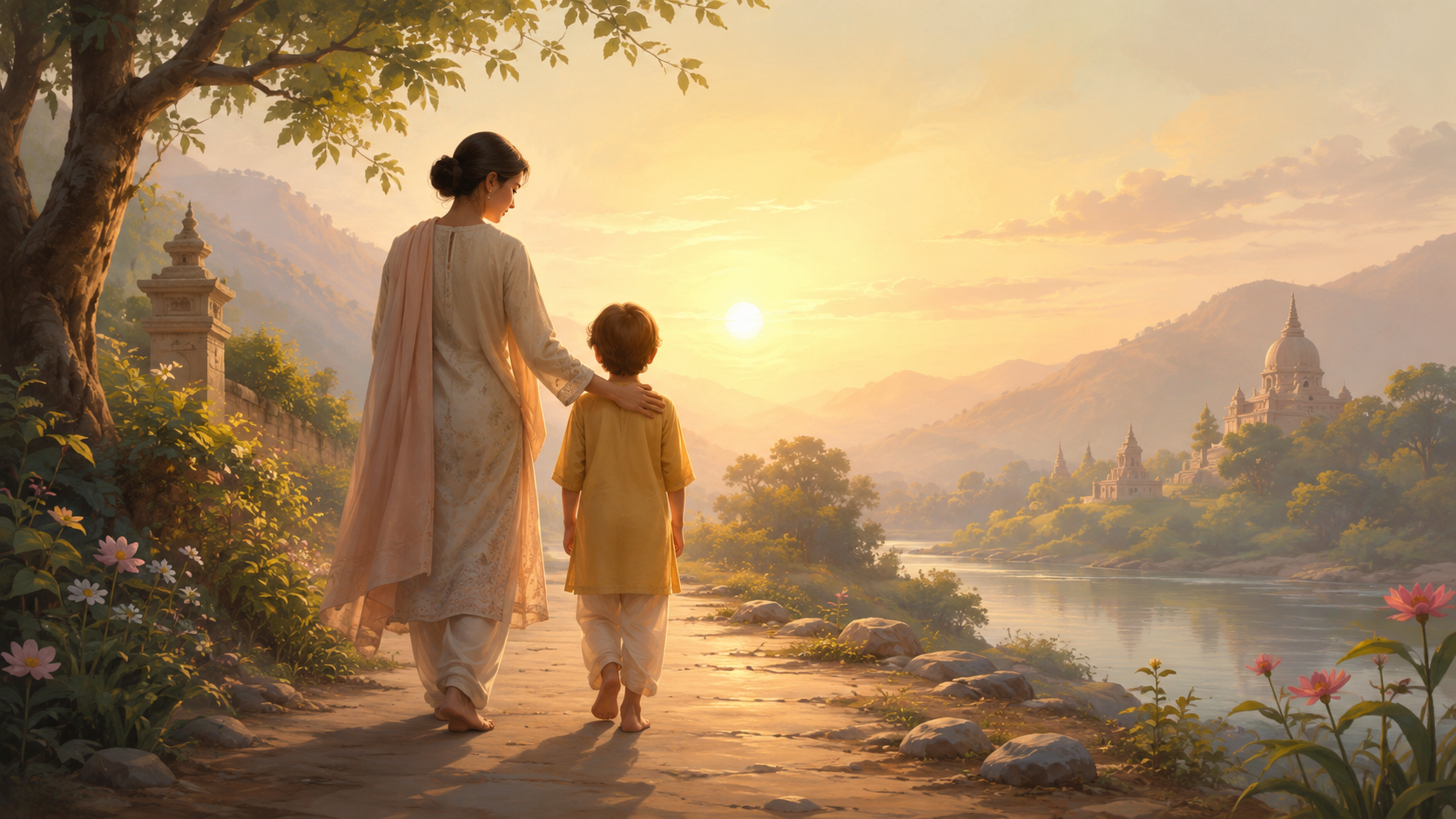
People consciously or unconsciously emulate their role models. That may be a movie star, a politician, a great scientist or doctor, a saint, or even a relative or friend whom they admire. A child’s role model is usually his mother or father. They are perfect in his or her eyes, at least until the child grows up and sees that they are full of failings, just like everyone else.
If we are fortunate, we get parents who are gentle, patient, and generous. There is a good chance that we will also become like them. On the other hand, if our parents are impatient, angry, and miserly, we may unfortunately develop those qualities. Parents have a great responsibility in setting an example for their children. They may think that their outbursts of anger stop with themselves, but in fact, they have repercussions for generations to come, because their children and grandchildren may also grow up feeling that anger is an acceptable quality.
The better role model we have, the better person and role model for others we become. We should look up to someone whose example puts us on a path that leads to happiness.
Professionals always need to be aware that the people they interact with often expect them to be good role models. I was trying to locate a doctor friend who used to work near Amma’s ashram in California but had moved to another state. Typing his name into Google, I was surprised to be directed to a page that said the following:
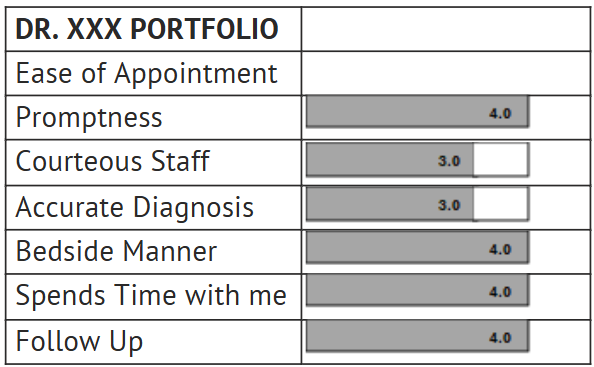
Recent comments: Becky - 04/17/2008
“Dr. XXXXX has been seeing our son for the last three years. Very smart guy. Wouldn’t go to anybody else.”
It struck me how carefully patients observe their physicians, expecting them to have the highest standards.
Amma, herself a great role model, frequently refers to some of the characters of ancient Indian history as examples of ideal qualities that we should develop. In fact, ancient bards invested a great deal of time and energy in recording the histories of those mahatmas so that future generations could benefit from their examples. The sage Vyasa wrote the Mahabharata for this very purpose. Knowledge of those characters’ qualities is as valuable and valid today as it was in ancient times.
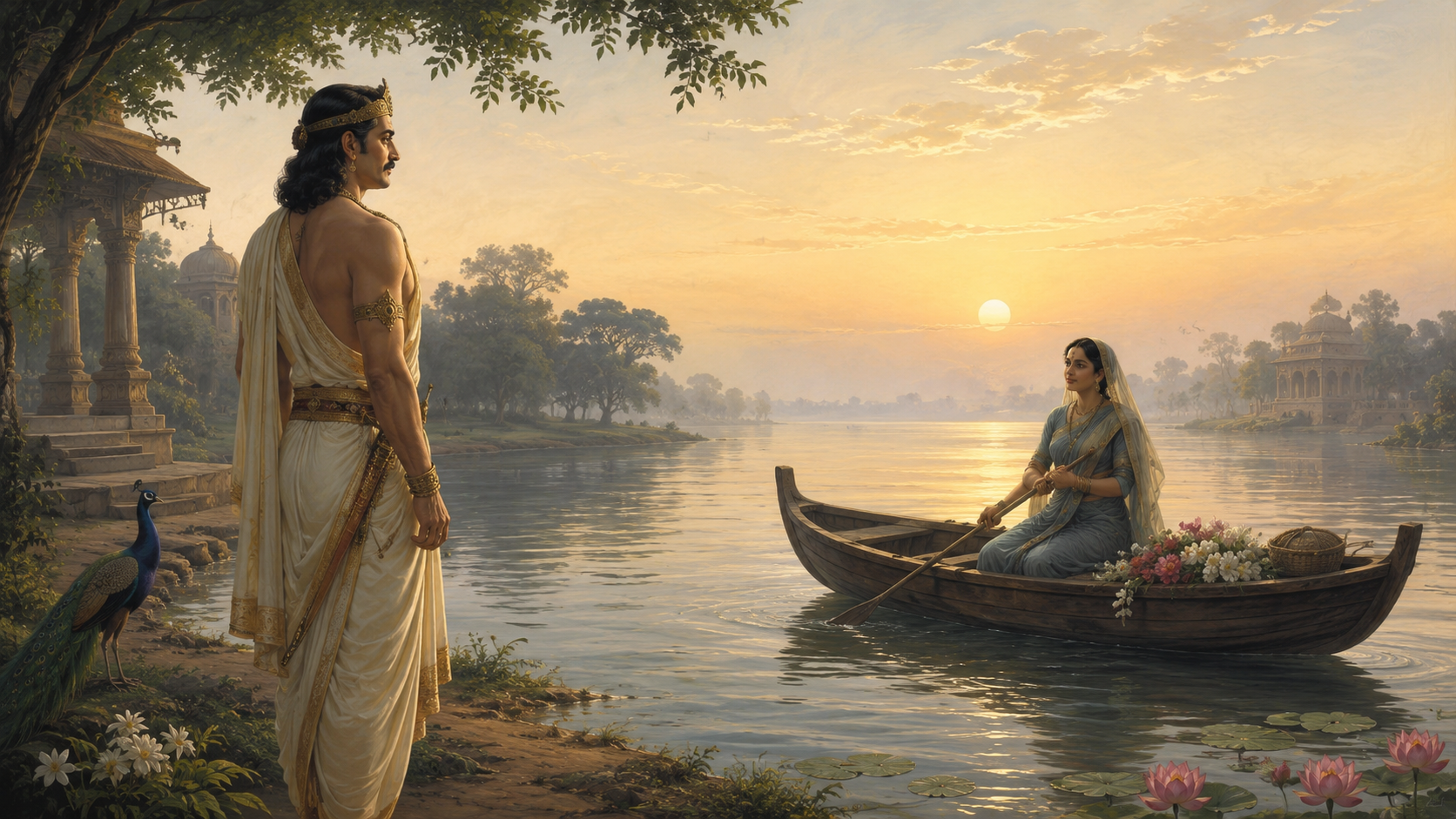
Most of us have heard of Bhishma, the son of King Shantanu, of Mahabharata fame. One day, Shantanu—whose first wife was Bhishma’s mother, Ganga, who had left him—was walking along the bank of the Yamuna River when he saw a beautiful lady rowing a boat. We should remember that, for the past thirty-five years, he did not have a wife. When he saw this extremely beautiful woman, the likes of whom he had never seen before, he was overwhelmed by feelings of attraction to her. Approaching her, he said, “Who are you, my dear?”
She said, “I’m Satyavati, the daughter of the chief of the local fishermen.”
He then went to the chief and said, “I am King Shantanu, and I would like to marry your daughter.”
The fisherman said, “Oh, I would be very happy if you do so. But there is one condition. I will give you my daughter in marriage, but her son should become the next king.”
Needless to say, Shantanu was quite upset and even angry. Thinking to himself, “I am never going to agree to this,” he went home.
The king soon developed some conspicuous symptoms. He began to lose weight and became depressed. The fire of desire was consuming his energy. There was also a contributing factor: he felt that he could not say anything about his problem to anyone. In other words, he was suffering from intense suppression. Here was a great example of what health sciences teach us: strong, unfulfilled, or unfulfillable desires can lead to physical and mental disease.
Greatly concerned about him, Bhishma asked his father one day, “Father, why do you seem so depressed and emaciated?”
Shantanu replied, “I was just thinking that, since you are my only son, if something happens to you, that will be the end of our dynasty. You frequently go out to fight with our enemies, and it is certain that you are going to get killed in battle one of these days. What will happen then? I do not have any other children.”
Bhishma thought, “My father was not worried about this until now. This could not be his real problem.” So he went to the Prime Minister.
“Do you know why the king is so upset? He is losing weight and looks so depressed,” asked Bhishma.
The Prime Minister said, “Yes, I know. There is a lady, the daughter of a fisherman, whom your father saw and wants to marry, but her father insists that the son born of their marriage should become the next king.”
Upon hearing this, Bhishma got into his chariot and drove to the fisherman’s hut. He said to the fisherman, “What is the problem? My father wants your daughter as his wife.”
The fisherman said, “There is no problem, but my daughter’s child should become the next king.”
Bhishma replied, “That is no problem for me either. I hereby renounce my right to the throne.”
Just like that! Can you imagine? Suppose you are a prince, and you are in line to become the next king in your family. If your father wanted to marry another lady under the same conditions that Shantanu had, would you agree to it? No way!
“There is one more thing,” said the fisherman. “I do not doubt you. I know you will not try to become the king. But what about your children? They may say, ‘We are the children of Bhishma, and we have a right to the throne.’”
“Quite so,” said Bhishma. “From today onward, I will live as a brahmachari for the rest of my life.”
“Then I hereby bestow my daughter!” said the thrilled fisherman, and that was that.
There are many great lessons that we can learn from this story. Most importantly, we should develop a selfless attitude in life. Toward this end, we should show respect and love for our parents. Even if we have to give up something we like in order to make them happy, we should be ready to do so.
But unlike Bhishma, most children do not want to give up anything to make their parents happy. They want only to be happy themselves and expect their parents to make them happy all the time. And if their parents do not make them happy? They may slam the door, scream, pout, or refuse to cooperate! Most of us will not even move to the next seat in the movie theater to let our mother or father sit down. “Daddy, there is an empty seat in the next row. You can sit there. I want to sit here; it has a good view.”
Listen to this story.
A teacher observed that one of the little boys in her class was pensive and withdrawn.
“What are you worried about?” she asked.
“My parents,” he replied. “Dad works all day to keep me clothed and fed and to send me to the best school in town. And he is working overtime to be able to send me to college. Mom spends all day cooking and cleaning and ironing and shopping, so I have nothing to worry about.”
“Why, then, are you worried?”
“I’m afraid they might try to escape!”
Let us give up a little bit of our selfishness to make them happy. And let us be as firm as Bhishma in our decision to do so always.
As the time for his death approached while on the battlefield, Bhishma said to those around him, “You should strive for attaining the Truth. Truth is the highest power. Always live with those of dharmic conduct, who abstain from cruel behavior and who have their minds under control. Let such people be adorable to you!” In other words, have a high-minded role model.
Having said so, Bhishma remained silent. Then, withdrawing the life force from his various limbs, that great soul pierced through the crown of his head and proceeded upward into the heavens like a meteor, becoming invisible and uniting with Eternity.